

JAMES WOOD
Staff Writer
This will be a two part series of articles regarding the life and legacy of Vannoy Streeter along with his various sculptures and their connection to the community.
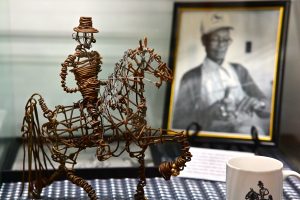
Among some of the most unique artists of his time, Wartrace native Vannoy “Wireman” Streeter had set an interesting and vibrant artistic legacy.
Being born in Wartrace in 1919, Streeter was exposed early on to the Walking Horse culture of the region, shaping his artistic tastes in the future. His wire-art skillset was entirely self-taught, starting in his childhood.
“As a child, he used metal baling wire and discarded coat hangers to create toys for his siblings because his parents could not afford store-bought ones,” Jody Turner-Smith, President of the Fly Arts Center in Shelbyville said, “What began as an act of love and necessity became a lifelong passion.”
The Fly Arts Center hosts several of Streeter’s pieces for public viewership, with others being also across the City of Shelbyville and beyond.
As the Walking Horse cultural identity of the area continued to develop and the Celebration Arena moved to Shelbyville, Streeter strove to integrate himself with the rich African American connections with the industry. Throughout his life, he gained a fascination for wire sculpting as a detailed form of art. He created several famous pieces, such as the various walking horse rider sculptures, which some have even been auctioned off for large sums of money.
Streeter later gained nationwide awareness later in his life especially after his featuring of his work in Atlanta at the National Black Arts Festival in 1990, bringing Bedford County local talent to the attention of the rest of the country. His unique form and style using wires to create highly ornate sculptures was new to the art world, blending it with his strong connection to his hometown and its Walking Horse culture. Prior to his entry into the art scene, most wire art had been stylistically minimalistic, however Streeter’s art form was very detailed and often captured motion.
Streeter’s connection to the county and the importance of local artistry and culture cannot be understated and his art would continue to gain national and even international attention.